Now that you’ve got the foundational concepts, it’s time to dive into the Design Sprint.
Here’s where you’ll rapidly prototype ideas, experiment with new approaches, and bring your concepts to life.
The goal is to explore, iterate, and shape the essential elements of your student experience design through hands-on work. Let’s dive in and see how far you can take your ideas!
Gather Your Team
Gather a group of stakeholders who are deeply invested in the design and will likely be responsible for testing it out. This group will provide critical feedback and help ensure the design is actionable and ready for real-world implementation.
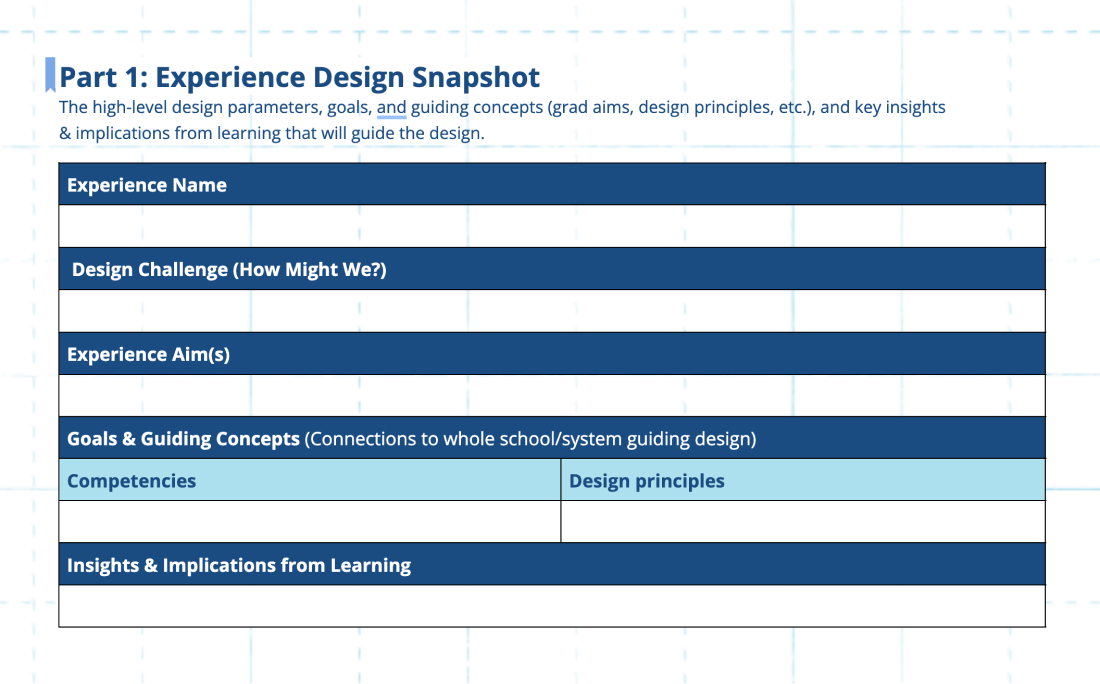
Student Experience Snapshot
The high-level design parameters, goals, guiding concepts (grad aims, design principles, etc.), key insights and implications from learning that will guide the design.
Name the experience and write a clear “How Might We” question to frame the challenge.
Identify the goals and guiding concepts, like competencies and design principles, that connect to the broader school or system design.
Use key insights from your community and connect them to implications for your design, ensuring they influence your decisions moving forward.
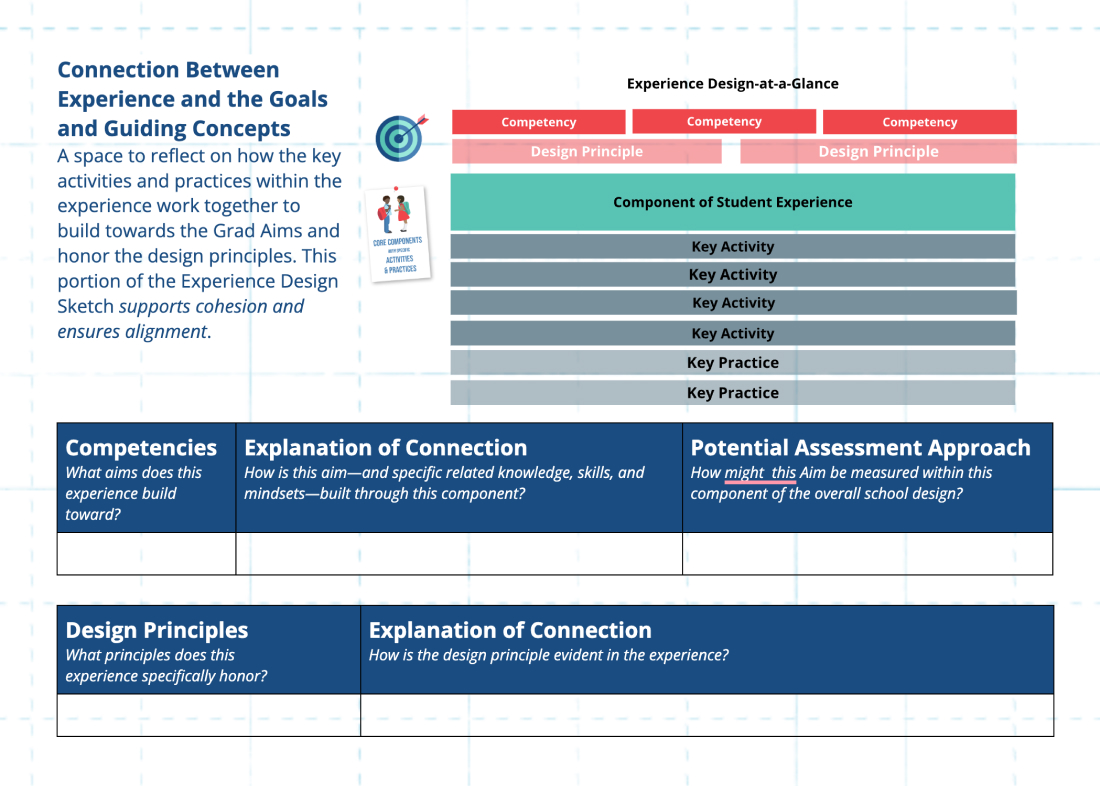
Design Principle and Competency Alignment
This section provides space to ensure the key activities and practices within the experience align with competencies and honor the design principles for cohesion and consistency.
Reflect on how each activity supports the development of core competencies.
Ensure all practices adhere to and reflect the design principles.
Review and adjust for alignment, ensuring the activities and practices build toward cohesive outcomes.
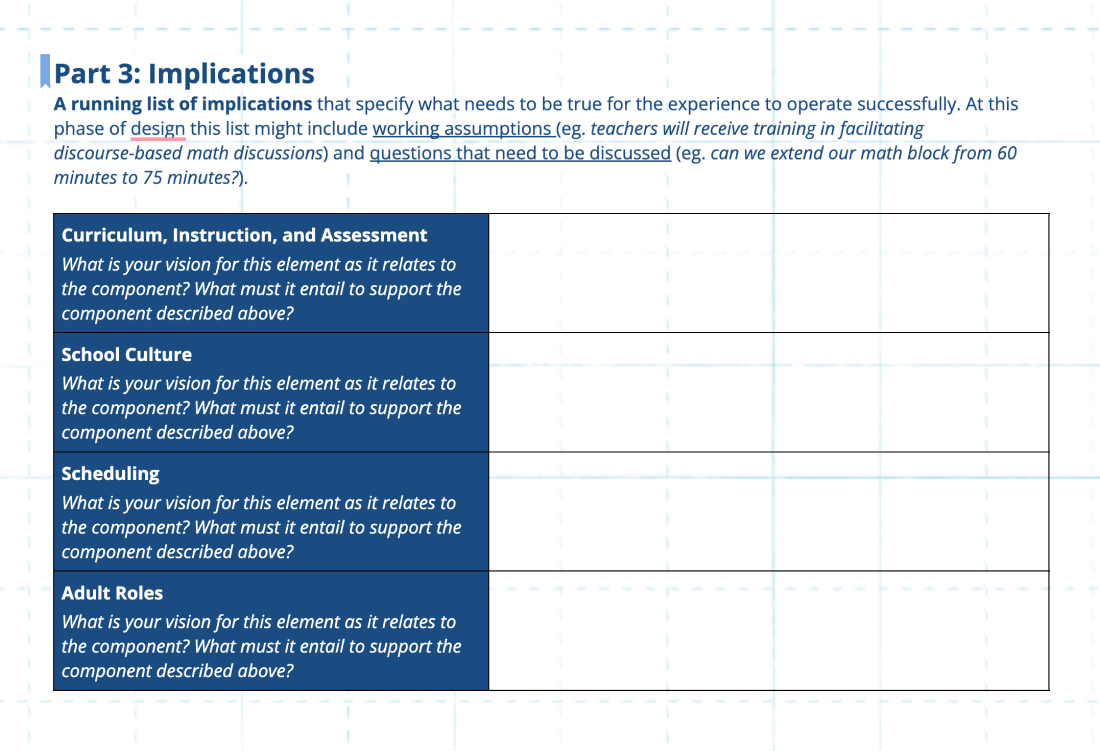
Consider Implications
This section captures a running list of implications specifying what must be true for the design to function successfully. It includes working assumptions (e.g., teachers need training for discourse-based math discussions) and open questions that require discussion (e.g., extending math block time).
List working assumptions required for the design to succeed.
Note open questions or uncertainties that need further discussion.
Continuously update this list as new implications arise during the design process.